Sketch possibilities before removing them
A bonsai composition suggests a larger tree without becoming a literal scale model. Trunk movement, branching and intervals of open space create that impression together.
Begin by looking from several angles. A photograph or simple pencil drawing lets you compare possibilities without sacrificing living material. The best-looking option on paper is not necessarily the most suitable operation for the tree this season.
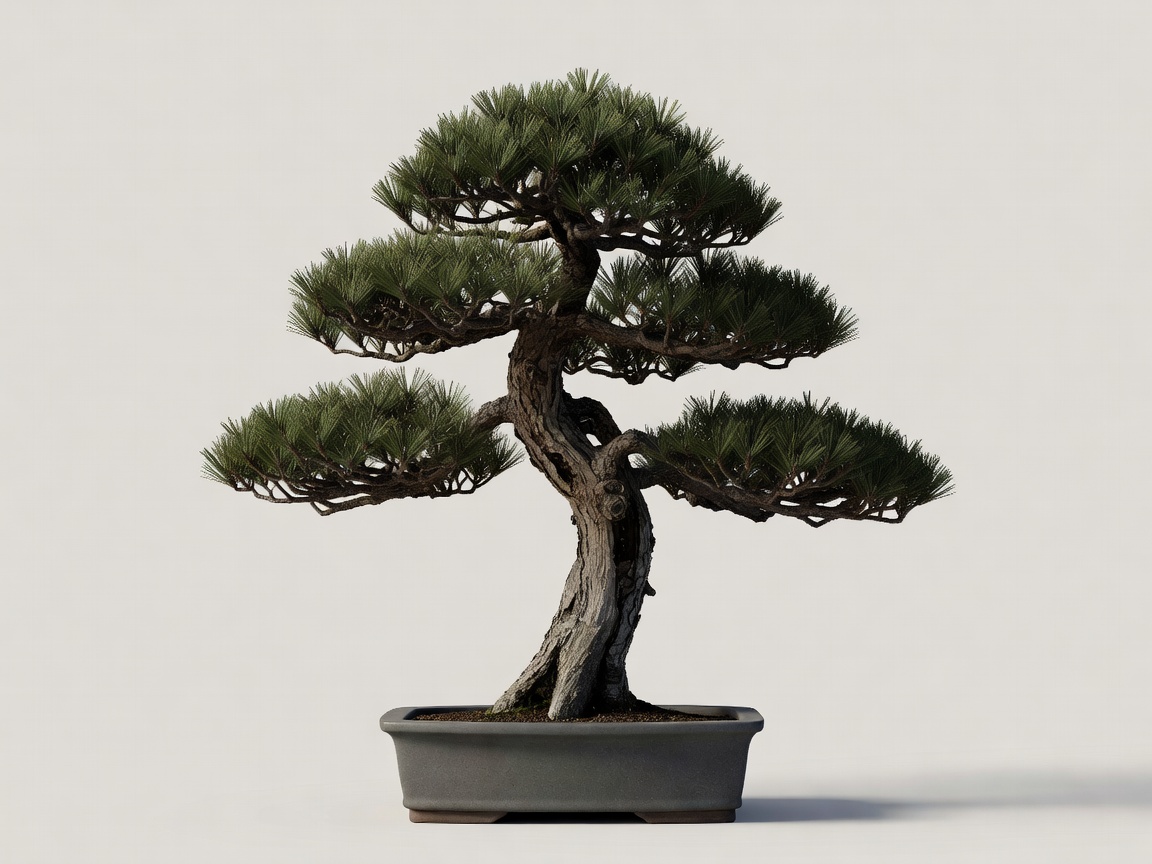
Follow roots into the trunk
The visible root base, often called nebari, helps a tree appear connected to the ground. It is one element of the composition, not a feature to manufacture by exposing roots indiscriminately. Fine roots need protection, and their management belongs within a suitable repotting plan.
Trace the trunk upward. Notice taper, changes of direction and the transition into the crown. A compelling line need not be perfectly smooth or symmetrical. Look for continuity: the upper tree should feel related to the lower trunk rather than attached as an unrelated shape. Existing scars and irregularities may become part of that reading.
Choose a front provisionally
A presentation front is a considered viewpoint, not the tree’s only valid side. Turn the container slowly and compare the root base, trunk movement, depth and branch positions. One angle may reveal a strong trunk while another makes the root spread more convincing.
Keep several candidate photographs. A front that hides a significant feature may become less useful later, while an initially awkward angle may reveal depth. Do not tilt or repot a tree simply to test every idea. A temporary visual study can remain a study until the tree is ready for structural work.
Let solid forms and openings interact
Branches establish direction and depth; the spaces between them help the viewer distinguish those roles. Look beyond the outer silhouette. Can you follow the principal branches, or does every area appear equally dense? Is there room for light to reach growth that you hope to retain?
Open space is not an instruction to strip a tree. Interior foliage can support future choices, and different species tolerate pruning differently. Sketch a possible reduction first. Ask which living shoot would remain, how that branch would continue growing and whether removing foliage would compromise recovery or eliminate a useful option.
Relate the crown to the container
A container changes the apparent weight and character of a tree. Depth, outline, finish and color can either support the composition or compete with it. Horticultural needs remain decisive: a visually delicate pot is not automatically appropriate for a developing root system.
Distinguish a development container from an exhibition choice. A tree building strength or structure may need a different environment from one prepared for a short display. Avoid treating a very shallow pot as proof of quality. The relationship between roots, substrate and local weather determines whether a container is workable.
Use style names as reading tools
Formal upright, informal upright, slanting, cascade and literati are useful descriptive categories. Japanese terms such as chokkan, moyogi, shakan, kengai and bunjingi appear in bonsai literature. These words help organize observation; they do not oblige every tree to fit a diagram.
A windswept composition can suggest persistent exposure, while a forest planting distributes attention among several trunks. In either case, convincing relationships matter more than checking every feature against a template. Study mature trees in parks and landscapes as well as exhibition bonsai. Notice how species and environment produce different growth habits.
Separate design intent from technique
Pruning and wiring are methods, not design goals. Before using either, explain what relationship you want to change. Is the aim to reveal trunk movement, establish depth or redirect future growth? A clear intention makes it easier to recognize when no immediate action is necessary.
Wire can damage bark as branches thicken, and bending can injure living tissues. Major branch work requires knowledge of species, season and technique. Beginners should seek hands-on instruction rather than copy a dramatic demonstration without its horticultural context. Avoid combining demanding operations simply because the tools are already on the bench.
Looking further
Study collection photographs from the Omiya Bonsai Art Museum and the National Bonsai Foundation. Their trees are references for looking, not evidence that identical techniques suit your plant. Next, read care through growing conditions.